It usually starts with a simple thought — “I should get a watch.”
Then confusion kicks in.
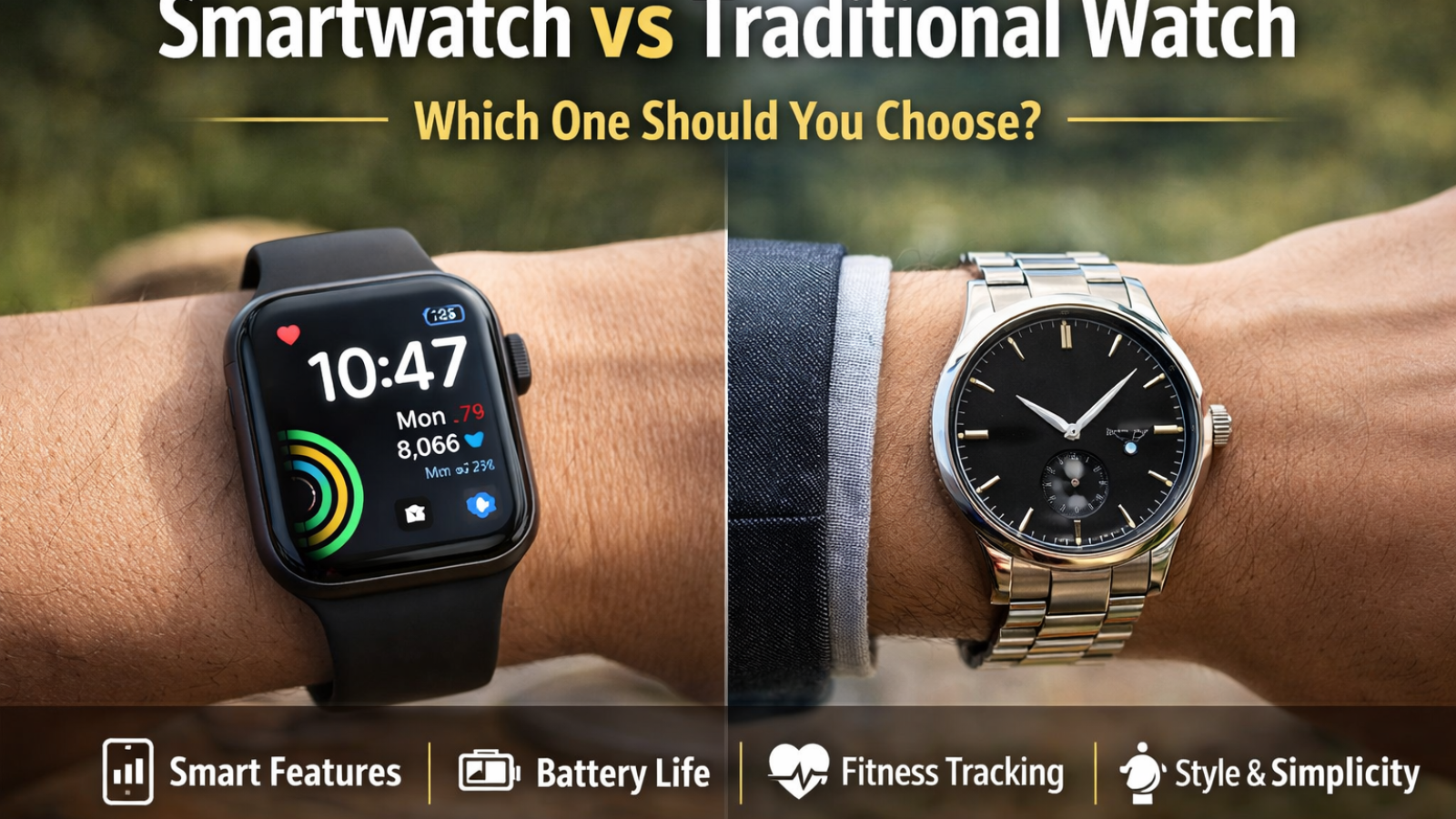
Do you go for a classic analog watch that looks clean and timeless? Or pick a smartwatch that tracks your steps, shows notifications, and basically acts like a mini phone on your wrist?
On paper, the comparison feels obvious. Smartwatches look more “advanced.” But once you actually start using both, things are not that straightforward.
It Depends More on Your Lifestyle Than the Watch Itself
Most people try to compare features first. That’s actually the wrong place to start.
A better question is: what kind of day do you usually have?
If your day involves constant phone usage, notifications, calls, maybe even workouts — a smartwatch naturally fits in. It becomes part of your routine.
But if your day is more about simplicity — office work, meetings, occasional outings — a traditional watch often feels more comfortable. No distractions, no charging, just wear and go.
This difference sounds small, but it changes the whole experience.
The Smartwatch Advantage (But It’s Not Always as Perfect as It Looks)
There’s no denying it — smartwatches pack a lot of features.
You can check messages without taking your phone out, track steps, monitor heart rate, set reminders, even control music. For someone trying to stay active or organized, it genuinely helps.
But here’s something people don’t talk about much.
After the initial excitement, many users stop using half of these features.
Notifications start feeling repetitive. Fitness tracking becomes occasional. Some even turn off alerts because constant buzzing gets annoying.
So yes, smartwatches are powerful — but only if you actually use what they offer.
Traditional Watches: Simple, But That’s the Point
A traditional watch does one thing — tells time.
And surprisingly, that’s exactly why many people still prefer it.
There’s no charging, no updates, no distractions. You wear it, and it just works. For years.
Also, the design factor is hard to ignore. A good analog watch often looks more premium than most smartwatches, especially in formal settings.
You’ll notice this in meetings, weddings, or even casual outings. A classic watch blends in better.
Battery Life Changes Everything
This is where the experience really starts to separate.
A smartwatch typically needs charging every 1–3 days, depending on usage. If you forget to charge it, it becomes just another blank screen on your wrist.
A traditional watch? You don’t think about battery for months… sometimes years.
This difference sounds minor until you live with it daily.
Many people enjoy smartwatches at first, but over time, charging becomes a small inconvenience that adds up.
Fitness Tracking: Useful or Overrated?
Smartwatches are often marketed around health tracking.
Step count, heart rate, sleep monitoring — all useful features.
But here’s a practical observation: not everyone needs detailed tracking every day.
If you’re someone who works out regularly or wants to stay active, these features can be genuinely helpful. They create awareness and sometimes even motivation.
But if your lifestyle is not very fitness-focused, you might check those stats for a few days… and then forget about them.
In that case, a traditional watch might feel more natural.
Comfort and Daily Wear
This is something people rarely consider before buying.
Smartwatches are usually bulkier. The screen, sensors, and battery add weight.
Some people don’t mind it. Others start noticing it after long hours.
Traditional watches, especially slim ones, often feel lighter and more comfortable for all-day wear.
Also, with smartwatches, you’re wearing a screen. With traditional watches, you’re wearing an accessory.
That subtle difference matters more than it sounds.
Style vs Function (And Where You Stand)
If we look at it honestly, the decision often comes down to this:
Do you value functionality more, or style and simplicity?
Smartwatches lean heavily toward function.
Traditional watches lean toward style.
Of course, there are stylish smartwatches and functional traditional watches, but the core identity doesn’t change.
A smartwatch tries to do more.
A traditional watch tries to stay timeless.
A Common Buying Mistake
A lot of people buy a smartwatch just because it feels like an upgrade.
“Why not go for something smarter?” — that’s the thinking.
But after a few weeks, some realise they didn’t actually need those features.
On the other hand, some people stick to traditional watches for years and later feel they’re missing out on useful features like notifications or fitness tracking.
The mistake is not understanding your own usage.
So, Which One Should You Choose?
There’s no universal answer, and that’s actually a good thing.
If your routine involves fitness, frequent notifications, and you like staying connected — a smartwatch will feel useful.
If you prefer simplicity, long-term reliability, and a clean look without distractions — a traditional watch makes more sense.
Some people even use both. A smartwatch for workouts or daily activity, and a traditional watch for outings or formal wear.
That might sound unnecessary at first, but it actually solves the dilemma.
Final Thought
Choosing between a smartwatch and a traditional watch isn’t about which one is better.
It’s about which one fits your life without forcing you to adjust.
Because in the end, the best watch is the one you wear every day — not the one with the most features.
Add a Comment