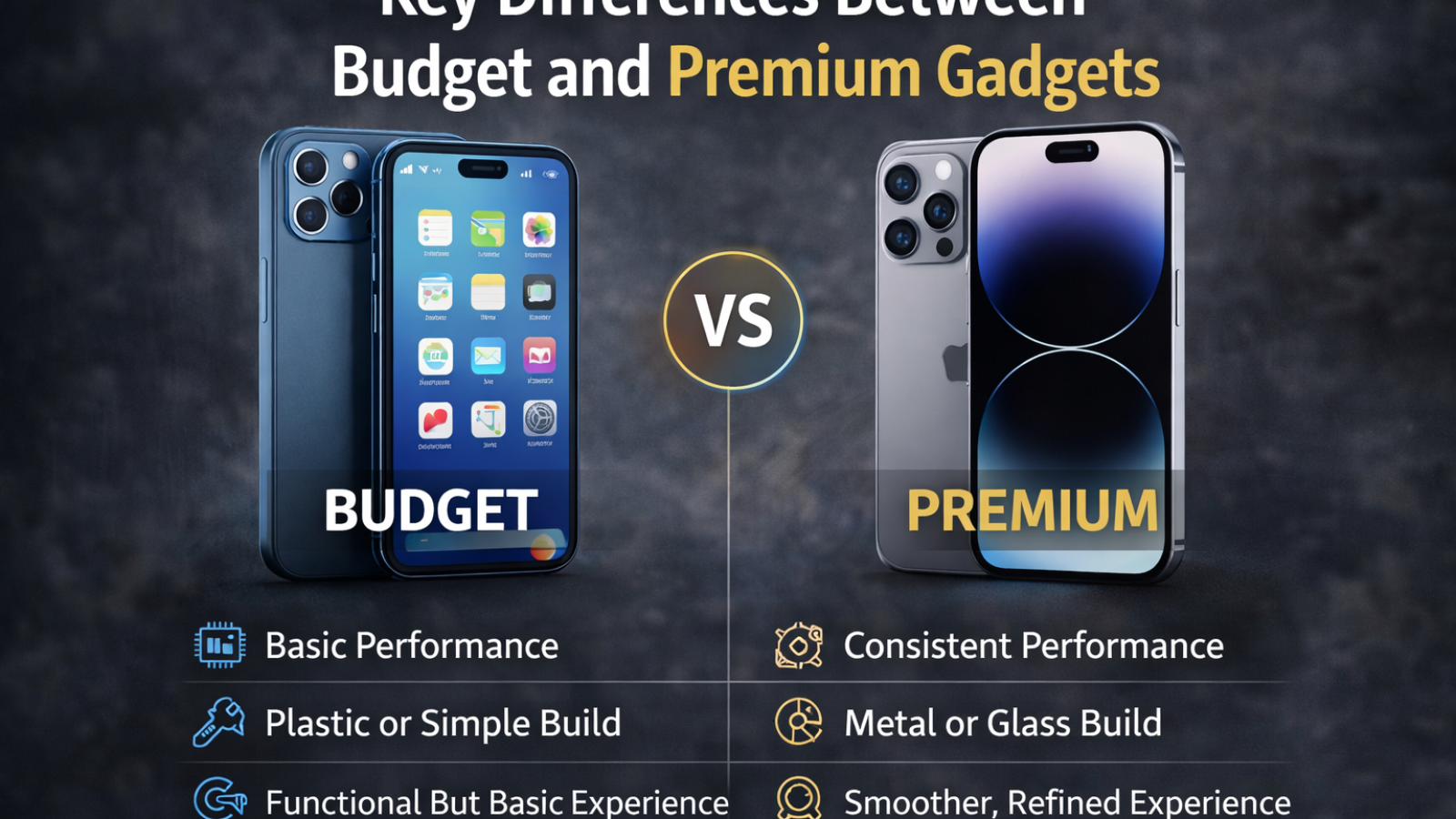
There’s a moment most people have faced at least once.
You’re about to buy a gadget — maybe a phone, headphones, or a smartwatch — and you see two options. One fits your budget perfectly. The other costs almost double… sometimes more.
And the confusing part? On paper, both seem to offer similar features.
So the obvious question comes up: what exactly are you paying extra for?
Because if both devices “do the same thing,” why does one cost so much more?
The answer isn’t as straightforward as brands make it sound.
It Rarely Starts With Features (Even Though It Looks Like It Does)
If you compare spec sheets, the difference between budget and premium gadgets doesn’t always look huge.
Both might have similar battery sizes. Same type of display. Even similar-looking features.
But real differences don’t always show up in bullet points.
They show up when you actually use the device for a few days.
Budget gadgets often try to offer more features for the price. Premium gadgets focus on how well those features work.
That difference sounds subtle… but it changes the experience completely.
Performance Feels Different Over Time
At first, many budget devices feel fast enough.
You open apps, switch between screens, everything seems smooth. But after some time — maybe a few weeks or months — small slowdowns start appearing.
Apps take a bit longer to load. Multitasking feels heavier.
Premium devices usually handle this better. Not just because of better processors, but because of overall optimization.
It’s not always about raw power. It’s about how consistently the device performs.
That consistency is what many people end up paying for.
Build Quality Is One of the First Noticeable Differences
Pick up a budget gadget and a premium one side by side — the difference is often immediate.
Budget devices usually use more plastic, lighter materials. Nothing wrong with that, but it affects feel and durability.
Premium gadgets often use metal, glass, or higher-quality finishes. They feel more solid, more refined.
But this isn’t just about looks.
Better build quality often means the device can handle daily wear better. Buttons feel firmer, hinges last longer, surfaces resist scratches more effectively.
These are things you don’t think about on day one… but notice after a few months.
Display Quality Isn’t Just About Resolution
A common assumption is that if two gadgets have the same resolution, the display quality is the same.
That’s rarely true.
Premium devices usually offer better brightness, color accuracy, and viewing angles. Even scrolling can feel smoother if the refresh rate is higher.
Budget displays may look fine initially, but under sunlight or long usage, differences start showing.
For someone who spends hours on a screen, this becomes noticeable very quickly.
Camera and Audio: Where Subtle Differences Show Up
This is where things get interesting.
Budget gadgets often advertise high megapixel cameras or “loud sound” features. And yes, they work.
But premium devices usually focus on processing.
Photos from a premium device tend to have better color balance, dynamic range, and consistency. Not always dramatically different, but enough to notice in real scenarios — low light, moving subjects, or tricky lighting.
Same with audio.
A budget speaker or headphone might sound loud. A premium one often sounds cleaner, more detailed.
It’s less about “how much” and more about “how well.”
Software Experience Feels Cleaner
This is something many buyers underestimate.
Budget devices sometimes come with extra apps, ads, or heavier user interfaces. It’s manageable, but not always smooth.
Premium devices usually offer a cleaner experience. Fewer unnecessary apps, better updates, smoother transitions.
Over time, this affects how enjoyable the device feels.
It’s not a spec you can measure easily, but you feel it during everyday use.
Longevity and Updates Matter More Than Expected
One thing people rarely think about while buying is how long the device will stay usable.
Budget gadgets often work well for a couple of years, but updates may slow down or stop earlier.
Premium devices usually receive longer software support and maintain performance better over time.
So while the upfront cost is higher, the device often stays relevant for longer.
This is where the real value difference shows up.
The “Hidden Cost” Factor
Here’s something that doesn’t get discussed enough.
Buying a cheaper gadget sometimes leads to upgrading sooner.
A device that feels outdated after 1–2 years might push you to buy again.
A premium device might last longer, reducing the need for frequent replacements.
So the cheaper option isn’t always cheaper in the long run.
Where Budget Gadgets Actually Make More Sense
Now, this doesn’t mean premium is always better.
Budget gadgets make a lot of sense in certain situations.
If your usage is basic — calling, browsing, light apps — you may never notice the difference.
Or if you prefer upgrading frequently, spending less each time can be practical.
Sometimes, paying extra simply isn’t necessary.
So What’s the Real Difference?
If you strip everything down, the difference is not just in features.
It’s in consistency, refinement, and long-term experience.
Budget gadgets focus on giving you maximum features right now.
Premium gadgets focus on giving you a smoother experience over time.
Final Thought
The real question isn’t “budget vs premium.”
It’s this:
Do you want something that works well today, or something that continues to feel good months later?
Because both options can be right — depending on what you expect from your device.
And once that expectation is clear, the choice becomes much easier.
Add a Comment