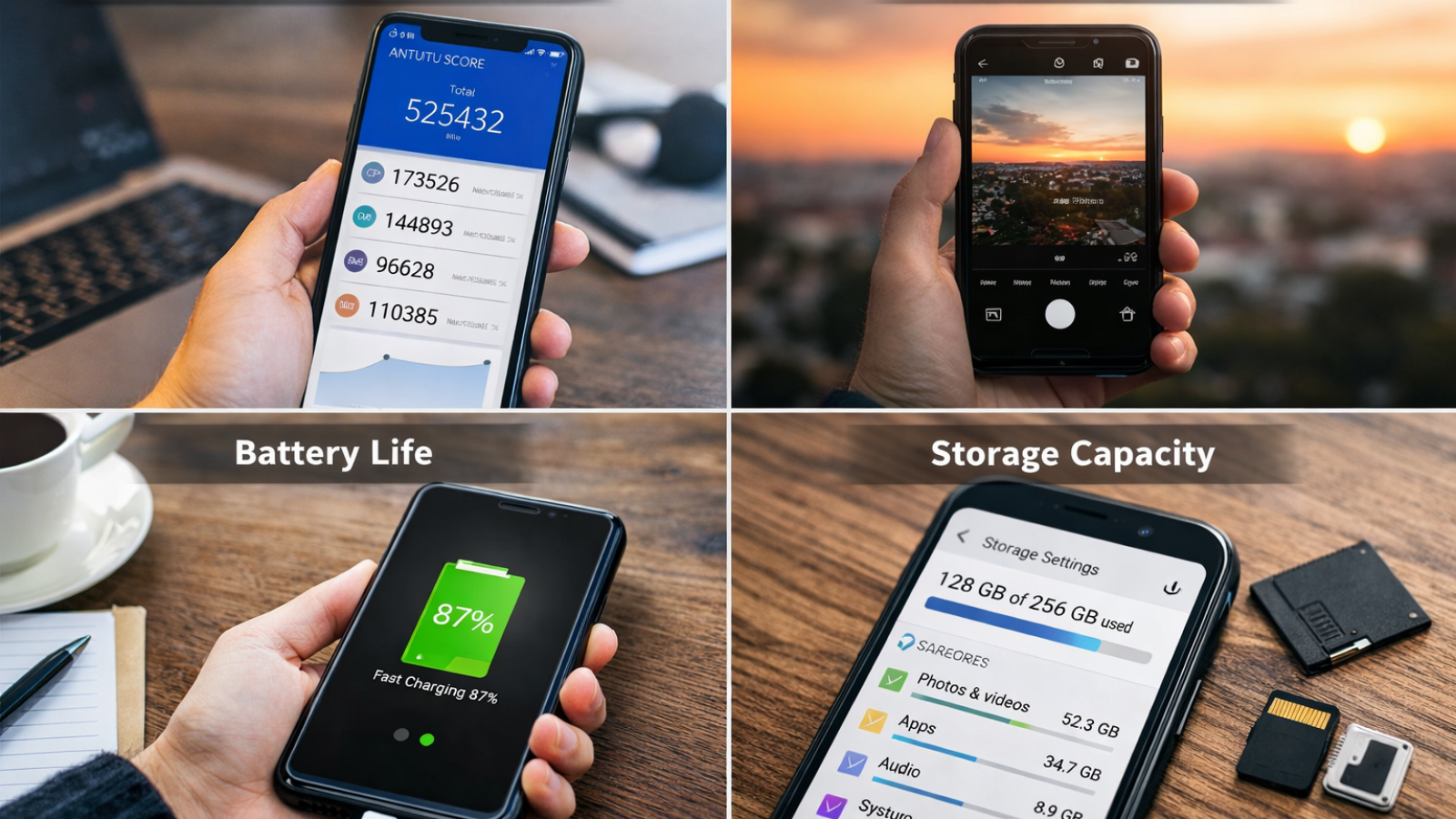
Walk into any mobile store today or scroll through an online marketplace and you’ll see hundreds of smartphones that look almost identical. Big screens, shiny backs, multi-camera setups — everything feels impressive at first glance. That’s exactly where many buyers make a mistake. They choose a phone based on what looks attractive instead of what actually matters in daily use.
A good smartphone isn’t just about specs written on a box. It’s about how smoothly it works when you use it every day — opening apps, taking photos, browsing the web, or simply getting through a full day without worrying about the battery.
If you’re planning to buy a new phone, there are a few practical things worth checking first. Ignoring them often leads to regret later.
Start With the Processor — It Matters More Than You Think
Many people jump straight to RAM or camera megapixels, but the processor quietly controls almost everything inside the phone.
Think of it like the engine of a car. A powerful engine doesn’t just increase speed; it also makes the whole driving experience smoother.
The processor determines how fast apps open, how well the phone handles multitasking, and whether games run smoothly or struggle. A strong chipset also improves battery efficiency, which means the phone doesn’t drain power unnecessarily.
For everyday users — messaging, social media, YouTube, casual photos — a decent mid-range processor is perfectly fine. But if you plan to play heavy games, record high-resolution videos, or keep the phone for several years, choosing a reliable chipset becomes far more important.
In short, don’t ignore the processor name when comparing phones.
RAM Helps, But It’s Not the Whole Story
RAM is often used in marketing because bigger numbers sound better. While RAM does help with multitasking, it isn’t the only factor behind smooth performance.
What RAM actually does is allow the phone to keep multiple apps running in the background without closing them.
For most users today:
6GB RAM handles normal daily tasks comfortably.
8GB RAM gives extra breathing space for multitasking.
Anything beyond that is mainly useful for power users or gaming.
However, pairing high RAM with a weak processor won’t magically make the phone fast. The balance between processor, RAM, and software optimization is what really matters.
Storage Space Fills Up Faster Than You Expect
People usually underestimate how quickly phone storage gets full.
Photos, videos, messaging apps, downloads, and system updates slowly eat up space in the background. After a few months, that “64GB phone” suddenly starts showing storage warnings.
For most buyers today, 128GB storage feels like a safer starting point. If you enjoy recording videos, saving movies, or installing large games, 256GB is even better.
Also remember that many modern phones no longer include memory card slots. Once internal storage fills up, managing files becomes annoying.
Planning a little extra storage now saves a lot of frustration later.
The Display Is What You Interact With All Day
No matter how powerful the phone is internally, the display is the part you experience every single minute.
A good display should feel comfortable to look at, bright enough outdoors, and smooth while scrolling.
There are a few details worth noticing:
Display technology
OLED and AMOLED panels usually produce richer colors and deeper blacks compared to traditional LCD screens.
Refresh rate
Phones with higher refresh rates (90Hz or 120Hz) feel noticeably smoother when scrolling through apps or social media.
Screen size
Larger screens are great for watching videos or gaming, while slightly smaller ones are easier to hold with one hand.
Choosing the right display isn’t just about visuals. It affects how enjoyable the phone feels in everyday use.
Camera Quality Is More Than Just Megapixels
Smartphone marketing loves big camera numbers — 50MP, 108MP, sometimes even higher.
But megapixels alone don’t guarantee better photos.
Camera performance depends on several factors working together: the sensor, image processing software, lens quality, and low-light optimization.
Sometimes a phone with a smaller megapixel camera produces far better photos because its software processing is stronger.
If photography matters to you, try checking real photo samples or user reviews instead of trusting the spec sheet alone.
That usually reveals the true story.
Battery Life: The Feature Everyone Notices
Nothing ruins the smartphone experience faster than a battery that struggles to last a full day.
Most modern phones now come with batteries around 4500mAh to 5000mAh, which is generally enough for typical daily usage.
Still, battery life doesn’t depend only on capacity. Efficient processors, optimized software, and display settings also influence how long the phone lasts.
Fast charging has also improved a lot in recent years. Some phones recharge from near empty to full in under an hour. While that’s convenient, battery capacity and efficiency are still the foundation of a good experience.
A phone that lasts all day without constant charging simply feels more reliable.
Software Experience Often Gets Ignored
Hardware specifications are easy to compare, but software experience can completely change how a phone feels.
Clean and well-optimized software usually results in smoother performance, fewer unnecessary apps, and faster updates.
Some brands also provide longer update support, which keeps the phone secure and compatible with newer apps for several years.
A phone with good software support often ages much better than one packed with heavy or cluttered interfaces.
Small Features That Quietly Improve Daily Use
Sometimes it’s the smaller features that make a smartphone feel complete.
Things like:
- reliable fingerprint sensors
- good stereo speakers
- stable network connectivity
- modern Bluetooth and Wi-Fi support
These details rarely appear in advertisements, yet they contribute heavily to everyday comfort.
Ignoring them may not seem like a big deal initially, but over time they become noticeable.
Final Thought
Choosing a smartphone isn’t really about finding the phone with the longest spec sheet. It’s about finding the device that fits how you actually use it.
A balanced phone — with a capable processor, enough RAM, comfortable display, reliable battery, and stable software — usually provides the best long-term experience.
Instead of chasing every new feature, focus on the fundamentals that affect daily performance. Those are the features that truly matter after the excitement of buying a new phone fades.
Quick Questions Buyers Often Ask
Is 6GB RAM enough for a smartphone today?
For most everyday tasks like messaging, browsing, streaming, and social media, 6GB RAM still works comfortably.
Does a higher refresh rate really make a difference?
Yes. Phones with 90Hz or 120Hz refresh rates feel noticeably smoother while scrolling or gaming.
Is fast charging important?
It’s convenient, but battery capacity and efficiency are more important for long-term usability.
How much storage should a smartphone have?
128GB works well for most users, though 256GB provides extra room if you store many photos and videos.
How long should a smartphone last before upgrading?
A well-chosen smartphone can easily remain reliable for three to four years with proper care.
Add a Comment